The short answer
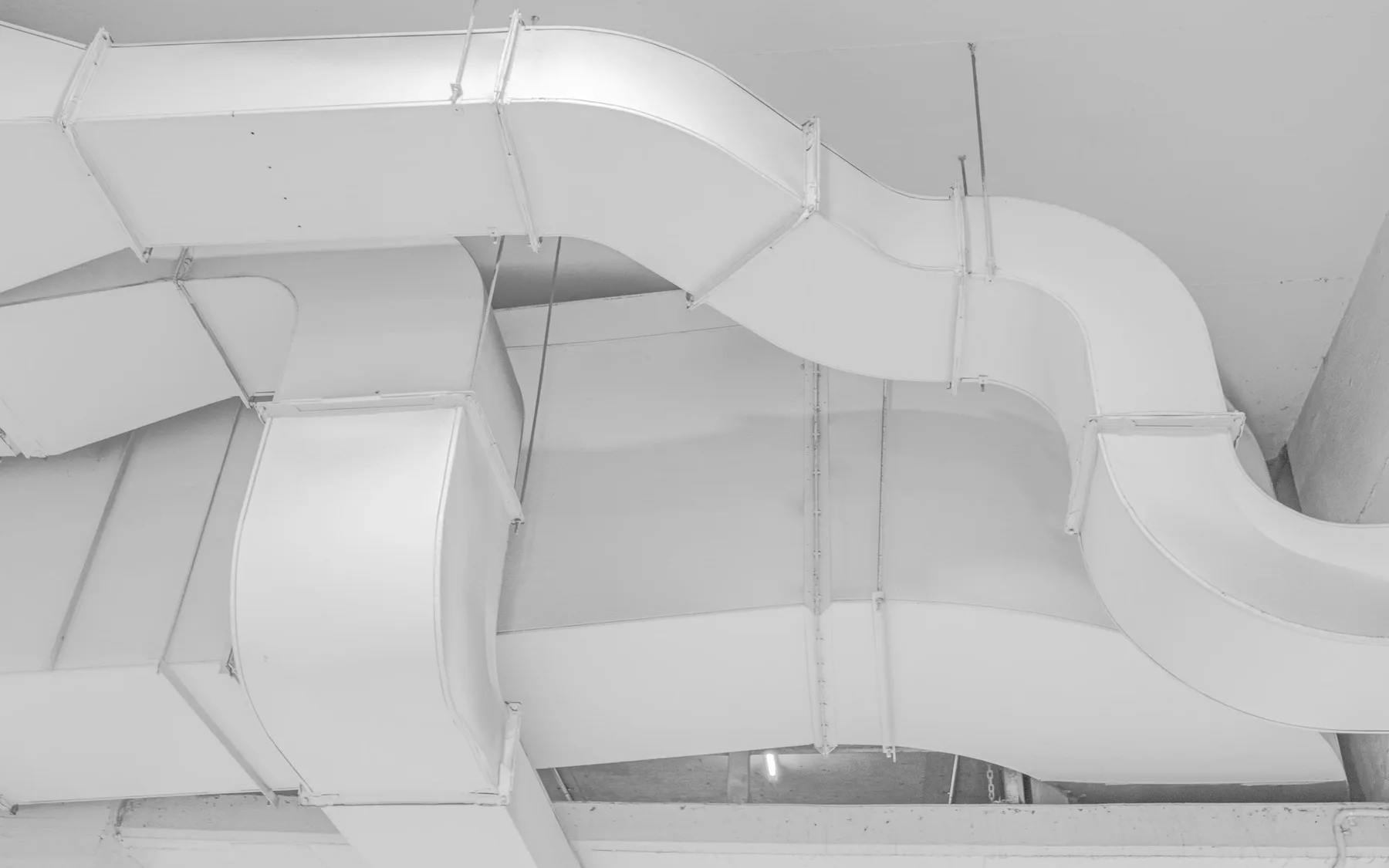
Replace ductwork when it is materially undersized, damaged, contaminated, poorly routed, inaccessible for durable repair, or incompatible with the airflow the new system requires. Do not replace every duct automatically. A measured duct assessment can support sealing, targeted return-air changes, insulation, balancing, or full replacement.
New equipment should not be connected blindly to an old distribution problem. ENERGY STAR estimates that 20% to 30% of the air moving through ducts in a typical house can be lost through leaks, holes, and poor connections. But leakage is only one failure mode: size, routing, insulation, return capacity, and room distribution also matter.
Repair, modify, or replace?
| Finding | Typical response |
|---|---|
| Accessible joint leakage | Seal with mastic or approved metal tape |
| One crushed or disconnected branch | Replace the damaged section |
| High return restriction | Add or resize return path and filter area |
| Poor room balance | Recalculate room airflow; modify branches or registers |
| Widespread deteriorated flex duct | Consider systematic replacement |
| Major size/layout mismatch | Redesign using Manual D |
| Suspected asbestos or contamination | Stop and use qualified specialists |
Household cloth “duct tape” is not a durable duct-sealing method. ENERGY STAR recommends mastic or metal tape for accessible joints.
Measurements to request before approving replacement
- Total external static pressure with the system operating.
- Pressure drop across the filter and indoor coil.
- Delivered or estimated system airflow.
- Duct-leakage test where practical.
- Room-by-room load and airflow targets.
- Visual documentation of crushed, disconnected, wet, or deteriorated sections.
- Supply and return sizes and a proposed layout.
Static pressure is the resistance the blower works against. A system can have a high-efficiency outdoor unit and still move too little air because the return, filter, coil, or ducts are restrictive.
Why return air deserves special attention
Many replacements focus on supply ducts while preserving a small central return. Modern equipment still needs airflow within manufacturer limits. A restrictive return can increase noise, reduce delivered capacity, worsen filtration performance, and push an electronically controlled blower to work harder.
Ask the contractor to separate filter pressure drop, coil pressure drop, and duct pressure. “The ducts look fine” is not a measurement.
What a complete duct scope includes
- duct material, dimensions, and insulation value;
- supply and return layout;
- plenums, transitions, takeoffs, dampers, and supports;
- sealing method;
- register and grille changes;
- removal and disposal;
- drywall or access work and who repairs finishes;
- leakage testing, airflow verification, and balancing;
- treatment of ducts in attics, garages, or crawlspaces;
- permits and code requirements.
If flex duct is used, routing and support are performance details. Long compressed runs and tight bends add resistance even when the nominal diameter looks adequate.
Should ducts be replaced when changing tonnage?
Any capacity change should trigger an airflow review. A smaller correctly selected system may need different airflow than the old unit. A larger system should never be installed on the assumption that existing ducts will handle it.
Manual J establishes room loads, Manual S selects equipment, and Manual D designs the distribution. Those steps should connect. Read our Manual J guide before accepting duct size based only on tonnage.
Duct sealing versus full replacement
Sealing is strong value when the layout and sizes are fundamentally sound. Full replacement is more defensible when the system has widespread damage, severe access problems, chronic condensation, poor room distribution, or a layout that cannot meet required airflow.
Request repair and replacement options when both are technically viable. Compare expected leakage, pressure, access warranty, and testing, not just price.
Buyer verdict
Approve duct work from evidence. The best quote identifies what is wrong, shows how the proposed dimensions solve it, and commits to post-installation airflow and pressure verification.
Frequently Asked Questions
How long does residential ductwork last?
Material age alone does not decide replacement. Inspect condition, connections, insulation, sizing, contamination, and measured performance.
Can new AC be installed on old ducts?
Yes, when the ducts are clean, sound, sealed, insulated where needed, and capable of delivering the new equipment's required airflow at acceptable pressure.
Should ducts be cleaned before a new AC?
Routine cleaning is not a substitute for fixing moisture, damage, or filtration problems. Ask why cleaning is proposed and whether contamination or construction debris is documented.
Sources
How this guide is checked
Written by Air Conditioner Guide Editorial Team. Editorial review by Air Conditioner Guide Editorial Team, last reviewed July 12, 2026. We check the sizing logic, quote-scope claims, and sources. No affiliate ranking bias.
Have a proposal?
Check the quote before you sign.
We'll look at the model match, capacity basis, install scope, warranty, and missing questions. Free, independent, no lead auction.
Check my quoteRelated guides
12 Air Conditioner Buying Mistakes to Avoid
Avoid the AC buying mistakes that create oversized equipment, missing scope, unverifiable efficiency, weak warranties, and expensive change orders.
Read the guide
AC Condensate Drain: Clogs, Traps, and Water Damage
Understand central AC condensate drains, pans, traps, pumps, overflow switches, clog symptoms, safe homeowner checks, and replacement-quote scope.
Read the guide
AC Electrical Safety: What Your Quote Should Cover
Understand the disconnect, breaker, and GFCI requirements a central AC replacement quote should include, and why the 2026 code deadline matters now.
Read the guide