The short answer
Choose central AC when usable ducts already serve the house well and you want concealed distribution from one system. Choose ductless when ducts are absent or problematic, individual-zone control matters, or an addition needs independent cooling. For mixed homes, a central-plus-ductless design can be better than forcing either system everywhere.
The correct comparison begins with the building. Good existing ducts favor central AC. No ducts, severe duct losses, additions, and distinct room schedules favor ductless. Equipment efficiency alone does not settle the design.
For a detached work pod, the room and envelope are the project, not the whole house. Use the network's backyard-office mini-split guide; for a system that must heat as well as cool, move to the ducted versus mini-split heat-pump comparison.
For a European project, first read why air conditioning in Europe is different, then compare the exact current systems in our best air conditioners in Europe guide. European labels use SEER and SCOP rather than the US SEER2 framework used elsewhere on this site.
Central versus ductless at a glance
| Decision factor | Central AC | Ductless mini-split |
|---|---|---|
| Distribution | One duct system | One or more indoor units |
| Appearance | Mostly concealed | Visible wall, floor, cassette, or slim-duct units |
| Zoning | Requires designed zoning or multiple systems | Natural room/zone control |
| Existing ducts | Can reuse good ducts | Avoids them |
| Filtration | Central filter options | Washable unit filters; model-specific accessories |
| Maintenance | Central indoor/outdoor service | Every indoor head needs access and cleaning |
| Failure impact | One system may affect whole home | A zone failure may be localized |
When central AC is the stronger choice
- Existing ducts are correctly sized, sealed, and reasonably located.
- Rooms share similar schedules and comfort targets.
- Concealed equipment matters aesthetically.
- Central filtration or indoor-air accessories are a priority.
- Local service depth is stronger for conventional systems.
Do not count old ducts as “free” until they are tested. ENERGY STAR says typical duct systems can lose 20% to 30% of moving air through leakage and poor connections.
When ductless is the stronger choice
- The home uses hydronic, radiant, or baseboard heat and has no ducts.
- An addition, attic, garage conversion, or sunroom needs independent conditioning.
- Existing ducts would be expensive or destructive to correct.
- Different zones have genuinely different schedules.
- A compact side-discharge outdoor unit solves a site constraint.
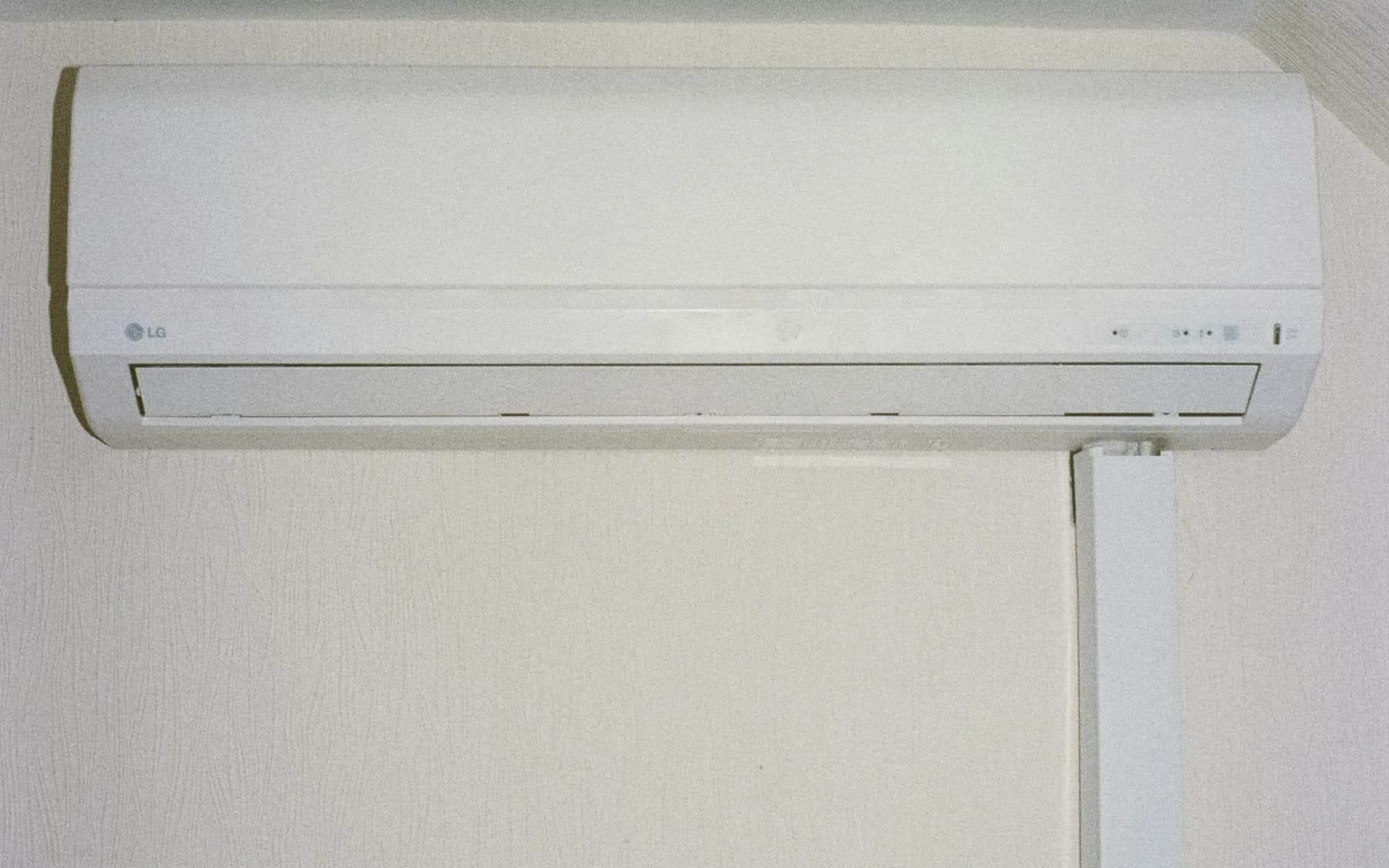
DOE describes mini-splits as useful for homes without ducts and additions where extending distribution is impractical. Avoided duct losses can be valuable, but wall penetrations, line-set routing, condensate disposal, and indoor-unit placement become design issues.
Multi-zone is not automatically better
One outdoor unit serving many indoor heads looks tidy, but the connected load and simultaneous demand need careful design. Ask for:
- each room's Manual J load;
- each indoor unit's minimum and design capacity;
- outdoor-unit minimum modulation;
- connected-capacity ratio;
- line lengths and vertical lift;
- capacity at design conditions;
- what happens when only one small zone calls.
An oversized multi-zone outdoor unit can cycle at low load even though each room appears “individually sized.”
When heating performance is the reason you are choosing ductless, compare exact cold-climate lines rather than the logos alone. The network's Mitsubishi vs Fujitsu heat pump comparison shows the low-temperature output, room-design, contractor, and labor-warranty questions that a cooling-only comparison does not answer.
Already decided on ductless for a cooling-primary zone and narrowing the brand? Our Bosch vs Mitsubishi mini-split comparison checks each brand's actual warranty document and purchase channel, since the two are sold through opposite distribution models.
Current equipment-only examples
If the load calculation already supports a single-zone mini-split, these are current equipment-only Cozeware routes. They are not sizing recommendations, installed quotes, or substitutes for checking local service. The links are affiliate links, which means we may earn a commission without changing the editorial verdict.
- Browse current Cozeware mini-splits
- See the 12,000 BTU, 115V Enduring model
- See the 18,000 BTU, 230V E-Save model
Cozeware advertises the public code AWIN20 for 20% off. Confirm the final cart total before paying. More importantly, confirm the electrical circuit, line set, condensate route, wall penetration, startup procedure, and who will perform refrigerant work. Cozeware's published warranty covers the compressor for seven years and parts for five, but excludes labor, removal, and reinstallation costs.
Humidity and ventilation
Both technologies can control humidity when selected and configured correctly. Ductless units often run long at low capacity, but multi-zone behavior and fan control vary. Central variable systems can also provide long cycles and coordinated dehumidification.
Neither system automatically supplies fresh air. Ventilation is a separate design question, especially in tight homes.
Installed scope that quotes often hide
For central AC, compare indoor coil or air handler, ducts, returns, filter cabinet, drain, electrical, controls, and commissioning.
For ductless, compare every indoor model, branch box if used, line-hide or chases, wall sleeves, condensate pumps, electrical circuits, mounting pads or brackets, line lengths, refrigerant additions, controls, and finish work.
A low per-head price can grow once routing and finish quality are specified.
Service and ownership
Ductless systems require filter cleaning at each indoor unit and periodic inspection of coils, blowers, drains, and pumps. Central systems concentrate indoor maintenance but can hide duct leakage or inaccessible attic problems.
Before choosing, identify qualified local service for the exact brand and system type. Warranty eligibility for some ductless brands changes with installer status and registration.
Buyer verdict
Use central AC when the duct system is an asset. Use ductless when zoning or avoided duct construction is the real advantage. Use a hybrid design when one problem room should not dictate the architecture for the entire house.
Frequently Asked Questions
Are mini-splits cheaper than central AC?
One or two simple zones can be less expensive than building ducts. Whole-home multi-zone projects can equal or exceed central replacement cost once every indoor unit, line route, drain, electrical circuit, and finish item is included.
Do mini-splits increase home value?
Value depends on climate, market expectations, installation appearance, and whether the system solves a real comfort problem. It is not a guaranteed appraisal adjustment.
Can one mini-split cool an entire house?
Only when the layout and loads allow air to reach all occupied spaces. Closed bedrooms and separated floors usually need dedicated distribution or additional zones.
Sources
How this guide is checked
Written by Air Conditioner Guide Editorial Team. Editorial review by Air Conditioner Guide Editorial Team, last reviewed August 31, 2026. We check the sizing logic, quote-scope claims, and sources. No affiliate ranking bias.
Have a proposal?
Check the quote before you sign.
We'll look at the model match, capacity basis, install scope, warranty, and missing questions. Free, independent, no lead auction.
Check my quoteRelated guides

Air Conditioning in Europe: Why It Is Different
Why Europe has less air conditioning than the US, where adoption is rising, and how climate, buildings, energy costs, and local rules shape the market.
Read the guide
Best Air Conditioners in Europe: 2026 Buyer's Guide
Compare split, multi-split, portable, and ducted air conditioners for European homes by climate, efficiency, noise, installation limits, and local service.
Read the guide
Best Central Air Conditioner Brands: A Better Shortlist
Carrier, Trane, Lennox, Rheem, Goodman, Daikin, Bosch, and more. Compare AC brands by installer fit, parts, controls, warranty, and matched equipment.
Read the guide