The short answer
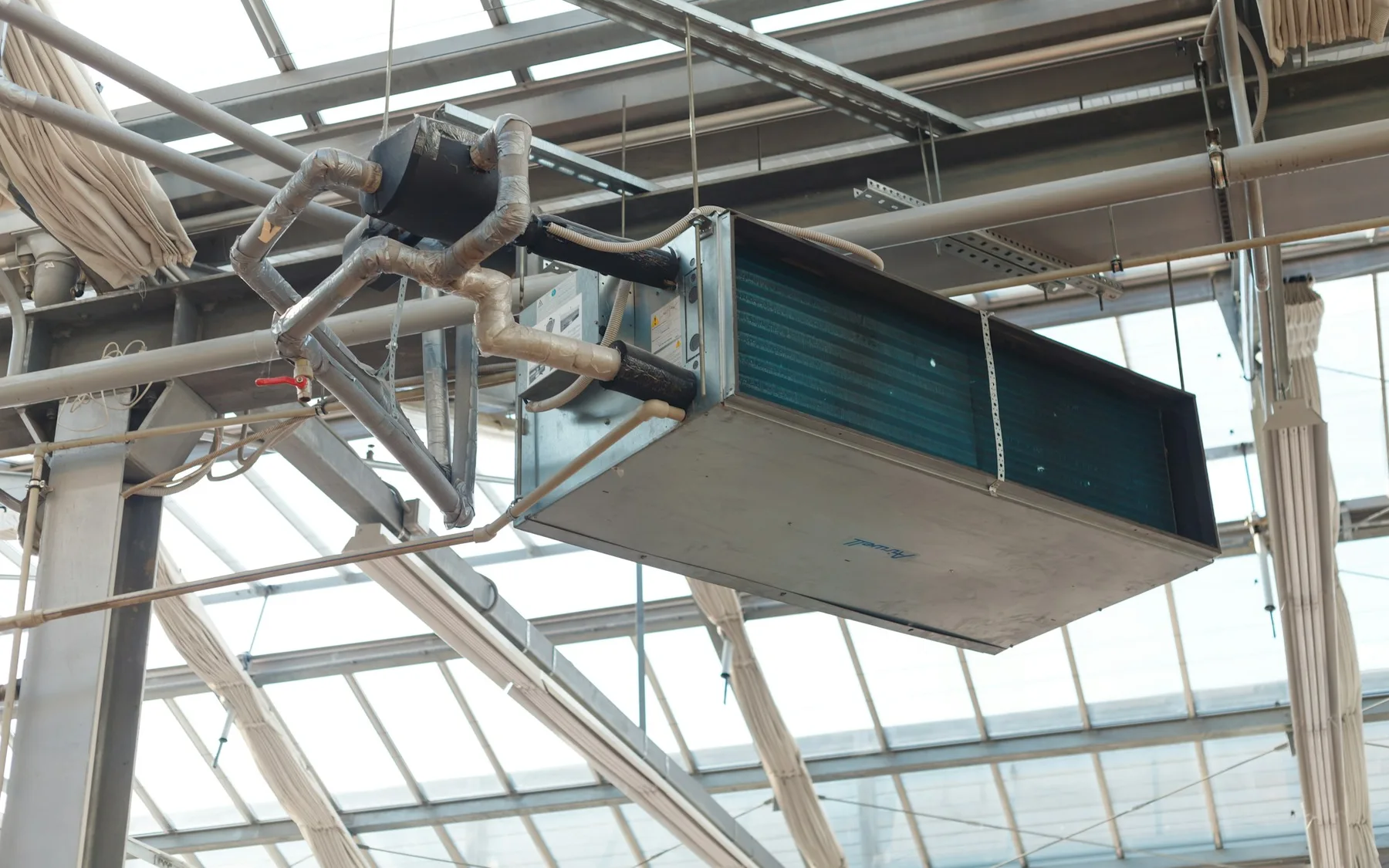
An air handler combines the indoor coil and blower in one cabinet and commonly pairs with electric resistance heat or a heat pump. A furnace provides combustion heat and a blower, with a separate evaporator coil added for AC. In both designs, the indoor equipment is part of the rated cooling system and must be compatible with the outdoor condenser, airflow, controls, and refrigerant.
If an AC quote names only the outdoor condenser, it is missing half the cooling system. The indoor coil absorbs heat, and the blower moves air across it and through the ducts.
The two common indoor arrangements
| Component | Air handler | Furnace plus coil |
|---|---|---|
| Indoor coil | Built into cabinet | Separate cased or uncased coil |
| Blower | Built into cabinet | Built into furnace |
| Primary heat | Heat pump and/or electric elements | Gas, propane, or oil furnace |
| Cooling match | Air handler + condenser | Coil + furnace blower + condenser |
| Electrical scope | May include large heat-kit circuit | Furnace circuit plus condenser circuit |
| Combustion safety | None for electric-only cabinet | Furnace venting and combustion must remain safe |
Both can be excellent. The choice follows the home's heating system and electrification plan.
Why the indoor model affects SEER2
AHRI certifies complete combinations. Coil size, heat-transfer surface, metering device, blower power, and airflow all influence capacity and efficiency. “Same brand” does not prove a valid match.
Request:
- outdoor model;
- indoor coil or air-handler model;
- furnace model when its blower is part of the match;
- AHRI reference;
- approved refrigerant and metering device;
- airflow setup for the selected capacity.
When reusing a furnace may make sense
Reuse can be rational when the furnace is relatively young, safe, efficient enough, in good condition, has a compatible blower, and appears in an approved cooling match.
Still inspect heat exchanger, venting, drain, filter, controls, blower performance, cabinet transitions, and remaining warranty. A new coil must physically and technically integrate without creating excessive pressure drop or drainage risk.
When combined replacement deserves consideration
- Furnace is near replacement age or has condition concerns.
- Blower cannot support required airflow or staging.
- New AC requires communicating controls unavailable on the old furnace.
- Coil and furnace access makes later replacement duplicative.
- Cabinet or transition dimensions create poor airflow.
- Electrification or heat-pump planning changes the indoor architecture.
Do not replace a sound furnace merely because it is convenient for the contractor. Compare the incremental combined scope with a staged plan.
Air handler and electric heat details
An air handler may include electric resistance heat strips for backup or primary heat. Those elements can require substantial electrical capacity. The quote should identify heat-kit kW, breaker and conductor requirements, panel capacity, control sequence, and any load-management implications.
Deciding whether to replace the furnace at all, or replace both the furnace and the AC with a single heat pump, is a separate decision from the indoor-match question on this page. Our central AC and furnace vs heat pump comparison covers the installed-cost, operating-cost, and ductwork tradeoffs. For heating-first heat-pump sizing and cold-climate model selection, use heat-pumps.guide. Air Conditioner Guide stays focused on the cooling quote and indoor match.
Controls and airflow
Single-stage systems may use conventional 24-volt controls. Two-stage and variable systems may need more capable or communicating indoor equipment to deliver staging, airflow profiles, dehumidification, and diagnostics.
Ask what features remain if a proprietary control is unavailable. Also request total external static pressure after installation; the best indoor cabinet cannot overcome a restrictive return or dirty filter.
Quote comparison
Normalize these line items:
- Indoor cabinet and coil model.
- Blower type and airflow capability.
- Heat source and heat-kit size.
- Filter cabinet and return transition.
- Drain pan, trap, pump, and overflow protection.
- Controls and sensors.
- Electrical and low-voltage work.
- AHRI rating and warranty.
- Commissioning measurements.
Then compare totals. An outdoor-only replacement and a full indoor/outdoor replacement are not the same project.
Buyer verdict
Treat the indoor unit as equipment, not an accessory. Reuse it only when safety, capacity, blower, controls, refrigerant, AHRI match, and remaining life support the decision.
Frequently Asked Questions
Does a central AC need an air handler?
It needs an indoor coil and blower. Those can be packaged in an air handler or provided by a furnace plus separate coil.
Can I replace the outdoor AC without replacing the indoor coil?
Sometimes, but only when the combination is manufacturer-approved, refrigerant-compatible, correctly metered, and supported by an AHRI match and warranty.
Is an air handler the same as a heat pump?
No. The air handler is indoor equipment. A heat pump is the refrigeration system that can move heat for both cooling and heating.
Sources
How this guide is checked
Written by Air Conditioner Guide Editorial Team. Editorial review by Air Conditioner Guide Editorial Team, last reviewed July 12, 2026. We check the sizing logic, quote-scope claims, and sources. No affiliate ranking bias.
Have a proposal?
Check the quote before you sign.
We'll look at the model match, capacity basis, install scope, warranty, and missing questions. Free, independent, no lead auction.
Check my quoteRelated guides

12 Air Conditioner Buying Mistakes to Avoid
Avoid the AC buying mistakes that create oversized equipment, missing scope, unverifiable efficiency, weak warranties, and expensive change orders.
Read the guide
Air Conditioner Warranty: Parts, Labor, and Registration
Understand AC parts, compressor, unit-replacement, and labor warranties; registration deadlines; transfer rules; exclusions; and documents to keep.
Read the guide
Air Conditioning in Europe: Why It Is Different
Why Europe has less air conditioning than the US, where adoption is rising, and how climate, buildings, energy costs, and local rules shape the market.
Read the guide