
Sizing first. Brand second.
Check the quote before you sign.
Send the model numbers, capacity basis, and scope. We'll check whether the Carrier quote is sized to the house or to the old nameplate, and what it leaves out.
- ✓ Free
- ✓ No contractor lead auction
- ✓ Reply in ~2 days
Product lines
Our Carrier review
Carrier belongs on a shortlist when the local dealer can document the matched system, controls, commissioning, and labor coverage. Compare the exact model family, not the badge alone.
HomeGuide's 2026 cost study puts a Carrier air conditioner at $3,000 to $15,000 installed, with a typical 3-ton replacement at $5,000 to $6,000 and a high-SEER2 5-ton system reaching $7,500 to $15,000 or more. By series, HomeGuide bands Comfort at $3,000 to $8,000, Performance at $5,000 to $10,000, and Infinity at $8,000 to $15,000 and up installed. Carrier's own 2026 pricing page publishes the same $3,000 to $15,000 plus frame and steers buyers to dealer quotes rather than phone estimates. Equipment-only context: HomeGuide's cross-brand table lists Carrier condensing units at $1,800 to $6,000 before labor. The spread is driven by tonnage, compressor type and SEER2 tier, ductwork condition (duct replacement runs $25 to $55 per linear foot), line set work, and permits ($100 to $250 typical). The R-454B transition added verifiable price pressure: Carrier announced a 6 percent blended average increase on residential HVAC effective March 1, 2025. All figures are national averages; high-cost metros and complex attic or closet installs routinely land above them, and a full system swap with an air handler or furnace prices well above an AC-only change-out.
homeguide.com · Verified July 2026
Before you buy Carrier
The fastest buyer pages to read next if this brand is on your shortlist.
Central AC vs ductless mini-split
How to decide between a ducted replacement and a zoned ductless design.
How to compare AC quotes
The fastest way to spot missing model numbers, vague scope, and capacity guesswork.
What central AC costs installed
Current installed-cost ranges so you can judge whether a brand quote is fair.
What size AC do I need
Why a Manual J load calculation beats square-footage rules, and how to ask for one.
From Carrier
Official product imagery and links from the brand.
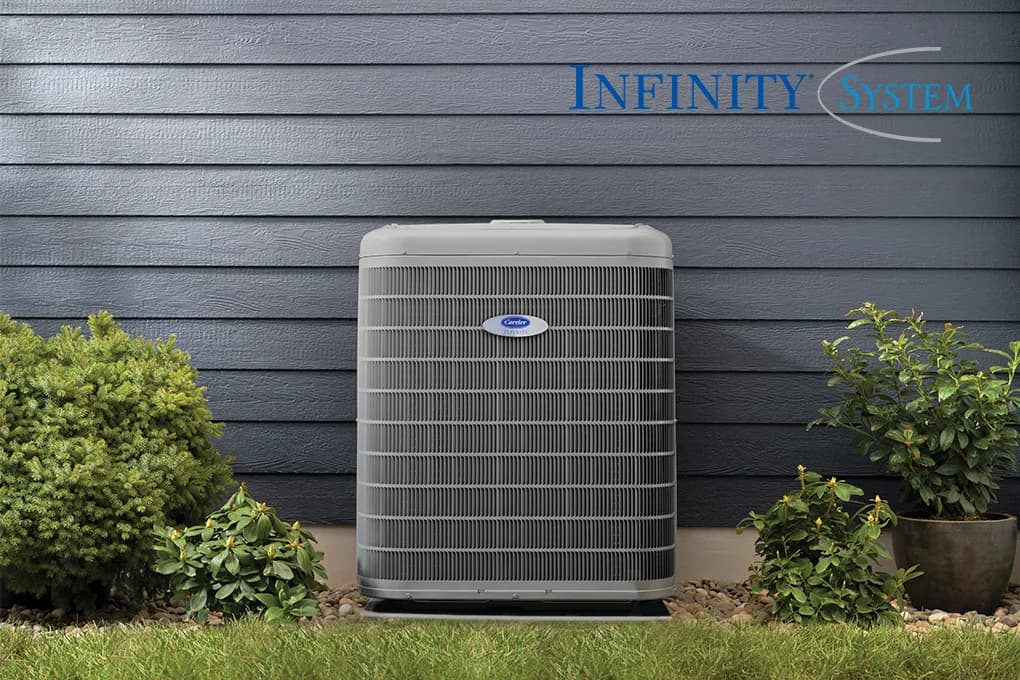
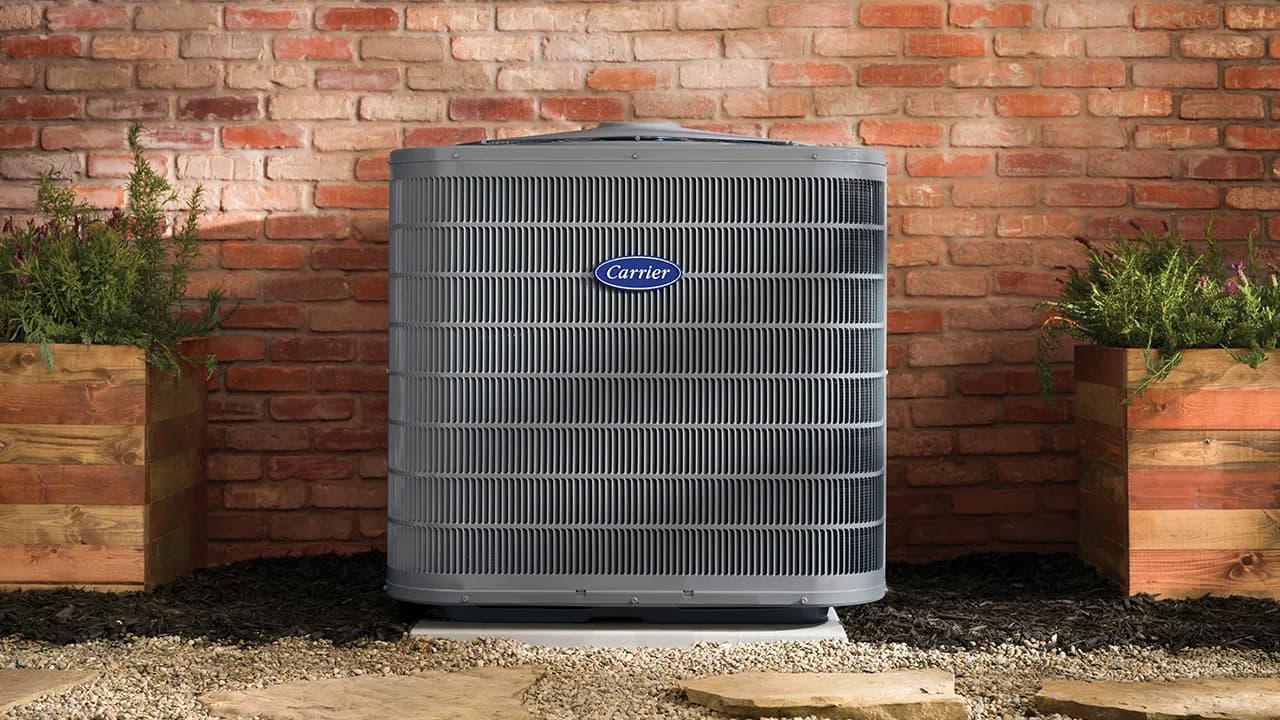

Images courtesy of Carrier.
Verified product research
What the current catalog actually says, checked Jul 10, 2026. Published maximums are catalog claims, not a promise for every size or indoor pairing.
Key models
Make the quote name the exact outdoor and indoor model numbers. Model-number fog is how the wrong equipment ends up on your house.
up to 21.0 SEER2 variable-speed flagship, as low as 55 dBA, communicating Infinity control, R-454B sold as Puron Advance; HomeGuide bands Infinity installs at $8,000 to $15,000 and up
up to 18.0 SEER2 two-stage mid-tier, also offered in a Coastal variant for corrosive climates; HomeGuide bands Performance installs at $5,000 to $10,000
single-stage in the 16 SEER2 class with IntelliSense connectivity, the value entry into the Performance family
single-stage at the Comfort tier ceiling of 16.5 SEER2, also available in a Coastal version; HomeGuide bands Comfort installs at $3,000 to $8,000
base single-stage for budget replacements; published Comfort-tier sound floors sit in the low 70s dBA, so placement next to bedrooms or patios deserves thought
Strengths & considerations
Strengths
- +Wide range from entry-level to premium systems
- +Large dealer and service footprint in many markets
- +Variable-speed and communicating options
Watch out for
- −Infinity's efficiency headline depends on a proprietary communicating ecosystem; controls and matched components are expensive to replace out of warranty
- −Published pricing is a wide $3,000 to $15,000 plus frame with no per-model bands, so comparing quotes takes more work than with brands that publish tier pricing
- −Comfort-tier sound levels in the low 70s dBA trail inverter-driven competitors at similar price points
- −Much of the lineup is shared with sibling brand Bryant at often lower quoted prices, so a Carrier-only shortlist can leave money on the table
Before you sign: confirm these
These come from Carrier's own documented terms and open questions, not our test results. Get the answers in writing before you sign.
- ?Register within 90 days and elect the Consumer Choice option in writing where offered; miss the window and coverage falls back to a 5-year parts warranty with no labor
- ?Confirm the quote is the current 26-series R-454B generation (26VNA1, 26TPA8, 26SPA6, 26SCA5, 26SCA4), not remaining R-410A stock; service refrigerant economics and future parts differ
- ?Infinity's rated SEER2 requires the matched Infinity communicating control and specific coil or fan coil pairing; ask for the AHRI certificate number for the exact combination on your quote
- ?Carrier moved list prices roughly 6 percent in March 2025 during the refrigerant transition; get quotes dated with a validity period so a slow project does not reprice mid-stream
Support & warranty
Verified from Carrier's warranty pages: 10-year parts limited warranty with timely registration, dropping to 5 years if you register late or not at all, and the Consumer Choice program on eligible equipment lets you pick 10-year parts-only or 5-year parts plus 3-year labor through participating dealers, elected within 90 days of installation. Labor beyond that is a dealer-level question, not a Carrier one. The dealer network is among the largest in the US, which cuts both ways: availability is excellent, but installer quality varies by market, so shortlist Factory Authorized Dealers and judge the commissioning checklist, not the badge.
Registered terms: Carrier lists 10-year parts coverage after timely registration; otherwise the term is generally five years, except where local law prevents registration-based limits. Eligible Infinity equipment may offer a Consumer Choice between 10-year parts-only or 5-year parts plus 3-year labor through participating dealers.
Either way: manufacturer parts coverage is not labor coverage. Confirm registration deadlines, who files the claim, and the contractor's own labor warranty in writing.
Alternatives to compare
Trane
Central & ductlessTrane is a sensible comparison brand when a strong local dealer supports it. Require the exact AHRI match and judge the proposal on airflow, controls, sound, and labor warranty.
Lennox
Central & ductlessLennox can be compelling for efficiency and comfort, provided local parts access and dealer depth are strong. Compare lifecycle serviceability as carefully as the headline rating.
Bryant
Central & ductlessBryant can deliver much of the same product architecture found elsewhere in the Carrier family. Let dealer quality, exact model, controls, price, and labor warranty decide the comparison.
Comparing a few quotes?
Tell us what Carrier is being quoted with. We'll check the model match, capacity basis, and scope line by line before you commit.
FAQ
Is Carrier a good air conditioner brand in 2026?
Carrier belongs on a shortlist when the local dealer can document the matched system, controls, commissioning, and labor coverage. Compare the exact model family, not the badge alone.
How much does a Carrier air conditioner cost installed?
Installed Carrier systems typically run $3,000 to $15,000, based on homeguide.com as of July 2026. HomeGuide's 2026 cost study puts a Carrier air conditioner at $3,000 to $15,000 installed, with a typical 3-ton replacement at $5,000 to $6,000 and a high-SEER2 5-ton system reaching $7,500 to $15,000 or more. By series, HomeGuide bands Comfort at $3,000 to $8,000, Performance at $5,000 to $10,000, and Infinity at $8,000 to $15,000 and up installed. Carrier's own 2026 pricing page publishes the same $3,000 to $15,000 plus frame and steers buyers to dealer quotes rather than phone estimates. Equipment-only context: HomeGuide's cross-brand table lists Carrier condensing units at $1,800 to $6,000 before labor. The spread is driven by tonnage, compressor type and SEER2 tier, ductwork condition (duct replacement runs $25 to $55 per linear foot), line set work, and permits ($100 to $250 typical). The R-454B transition added verifiable price pressure: Carrier announced a 6 percent blended average increase on residential HVAC effective March 1, 2025. All figures are national averages; high-cost metros and complex attic or closet installs routinely land above them, and a full system swap with an air handler or furnace prices well above an AC-only change-out.
Who is Carrier best for?
Broad dealer access and a deep product ladder. A large residential HVAC brand with conventional, multi-stage, variable-speed, and ductless choices.
What should buyers watch out for with Carrier?
Register within 90 days and elect the Consumer Choice option in writing where offered; miss the window and coverage falls back to a 5-year parts warranty with no labor Confirm the quote is the current 26-series R-454B generation (26VNA1, 26TPA8, 26SPA6, 26SCA5, 26SCA4), not remaining R-410A stock; service refrigerant economics and future parts differ
What brands should you compare against Carrier?
Most buyers should compare Carrier with Trane, Lennox and Bryant before signing. That gives you a better read on equipment tier, dealer quality, and quote pressure. Sizing first, brand second.
How strong is Carrier on warranty and support?
Verified from Carrier's warranty pages: 10-year parts limited warranty with timely registration, dropping to 5 years if you register late or not at all, and the Consumer Choice program on eligible equipment lets you pick 10-year parts-only or 5-year parts plus 3-year labor through participating dealers, elected within 90 days of installation. Labor beyond that is a dealer-level question, not a Carrier one. The dealer network is among the largest in the US, which cuts both ways: availability is excellent, but installer quality varies by market, so shortlist Factory Authorized Dealers and judge the commissioning checklist, not the badge.
Sources (8) · Verified Jul 10, 2026
Last researched Jul 10, 2026. Specifications and warranty terms change; confirm the certificate and warranty document tied to your exact model and installation date.
Learn more
Methodology
Brand verdicts are based on buyer fit, catalog depth, dealer and parts access, warranty language, and the quote risks that show up after installation. Sizing first, brand second: the badge on the condenser decides less than the load calculation, the AHRI match, and the installer's commissioning work.
Every profile links its primary sources and carries a research date. Pricing appears only when we hold sourced, dated numbers. If dealer access, parts availability, or warranty terms are thin, we say that plainly instead of hiding it behind catalog copy.
Getting a Carrier quote?
Send it before you sign. We check the model match, capacity basis, scope, controls, and warranty language, and tell you what to push back on. Free, no sales pitch.
Free. No sales pitch. Personal reply in ~2 business days.
No quote yet? Benchmark it with the sizing and cost calculator